
As of early March 2026, the UK new car market has recorded data for just the first month of the year — January — with February figures yet to be released by the Society of Motor Manufacturers and Traders (SMMT). Nevertheless, the opening salvo has been encouraging. Total new car registrations in January stood at 144,127 units, representing a solid 3.4% increase year-on-year compared to January 2025. This marks the strongest January new car sales performance since before the pandemic in 2020, signalling resilience in consumer demand despite ongoing economic pressures and the looming challenges of the Zero Emission Vehicle (ZEV) mandate.
The SMMT’s latest market outlook, updated following these January results, forecasts a modest full-year growth of 1.4% for 2026, projecting total registrations to reach around 2.048 million units. Battery electric vehicles (BEVs) are expected to climb to 28.5% market share over the course of the year — a rebound from January’s dip — supported by expanding model choice, longer ranges, falling battery costs, and the anticipated reintroduction of government incentives like the Electric Car Grant.
January 2026: Key Market Highlights
January’s figures paint a picture of steady overall growth but highlight divergent trends across powertrains:
- Petrol vehicles retained dominance, accounting for roughly 47-48% of the market (consistent with recent patterns).
- Plug-in hybrids (PHEVs) surged impressively by 47.3%, claiming nearly 13% share and emerging as the fastest-growing segment — appealing to buyers seeking electric driving for short trips without full EV commitment.
- Hybrid electric vehicles (HEVs) grew by 4.8%, holding around 13.4% share.
- Battery electric vehicles (BEVs) edged up marginally by 0.1% to 29,654 units, but their market share slipped to 20.6% (from 21.3% in January 2025) — the lowest since April 2025. This shortfall against the ZEV trajectory has raised concerns, though experts view January as unrepresentative of the full-year trend.
SUVs and crossovers continued to dominate buyer preferences, comprising the majority of top-selling models. Chinese brands made further inroads, with strong performances from newcomers and established players alike, reflecting excellent value, generous specifications, and aggressive pricing amid cost-of-living sensitivities.
The Top 10 Best-Selling Models in January 2026
Here are the UK’s most popular new cars so far in 2026, based on SMMT registrations data for the opening month:
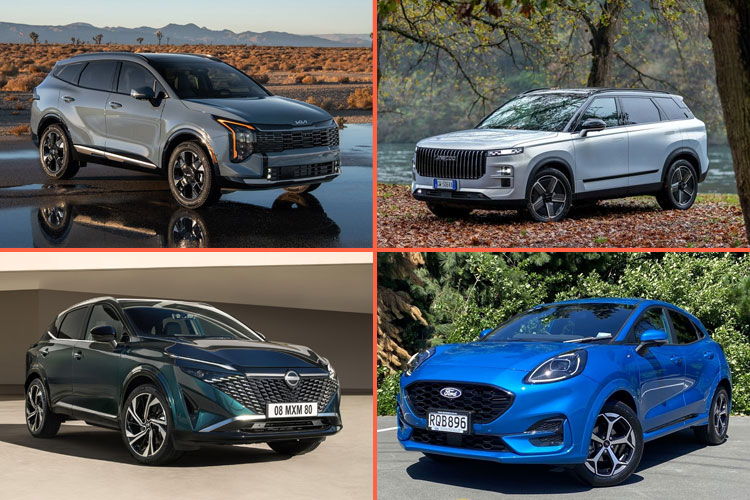
1. Kia Sportage – 4,675 registrations
The mid-size SUV reclaimed the throne it so nearly claimed in previous years, posting a healthy 34.5% year-on-year increase. Its broad appeal lies in the range of efficient powertrains (mild-hybrid, full-hybrid, PHEV), spacious family-friendly cabin, generous equipment levels, and Kia’s class-leading seven-year warranty. Competitive pricing and strong residuals make it a smart choice for private and fleet buyers alike.
2. Jaecoo 7 – 4,059 Registrations
The standout story of January, this Chery-owned Chinese mid-size SUV rocketed into second place — a remarkable feat for a relatively new entrant. Offering premium-like features, plush interiors, advanced tech, and hybrid options at mainstream prices, it underscores the rapid rise of Chinese manufacturers in the UK. Just 616 units behind the leader, it could mount a serious challenge as the year progresses.
3. Ford Puma – 3,715 Registrations
The former multi-year champion slipped to third despite a strong 59.3% year-on-year rise. This compact crossover remains hugely popular for its fun driving dynamics, clever ‘MegaBox’ boot storage, mild-hybrid efficiency, and youthful styling — though larger family SUVs appear to be stealing some spotlight early in 2026.
4. Nissan Qashqai – 2,995 Registrations
The evergreen Qashqai holds firm in fourth, benefiting from its reputation for reliability, refined ride, and updated tech. It continues to attract buyers seeking a proven mid-size crossover.
5. Vauxhall Corsa – 2,902 Registrations
Britain’s favourite supermini stays relevant with sharp looks, efficient engines (including electric variants), and affordability — ideal for urban drivers and first-time buyers.
6. BYD Seal U – 2,550 Registrations
Another strong showing for Chinese brands, this spacious family SUV leverages BYD’s battery expertise for competitive pricing and tech-heavy cabins.
7. Nissan Juke – 2,517 Registrations
The quirky compact crossover appeals with bold design and peppy performance.
8. Volkswagen Tiguan – 2,425 Registrations
The all-new model brings a premium feel, spaciousness, and efficient mild-hybrid tech.
9. Volkswagen Golf – 2,072 Registrations
The iconic hatchback endures with balanced dynamics and broad appeal.
10. MG HS – 2,035 Registrations
MG’s mid-size SUV rounds out the top 10, offering vast space and value-driven specs.
Broader Insights and What Lies Ahead
The dominance of SUVs, in particular medium sized SUVs/Crossovers (seven of the top 10 are crossovers or SUVs) reflects enduring UK preferences for higher seating positions, versatility, and perceived safety. The surge of PHEVs and the strong debut performances from Chinese models like Jaecoo and BYD highlight shifting priorities: buyers are increasingly prioritising low running costs, long warranties, and feature-packed vehicles over traditional brand loyalty.
For BEVs, January’s slight dip in share is tempered by optimism — the Renault 5 emerged as a private-buyer favourite in the electric segment, suggesting smaller, more affordable EVs could drive future growth.
With February data pending and ’23’ number plates fresh on the road, the standings could evolve quickly. New launches, potential incentives, and seasonal factors (spring often brings stronger volumes) will shape the narrative. For now, though, 2026 has begun on a buoyant note: the market is growing, hybrids and PHEVs are thriving, and diverse options — from established favourites like the Sportage to disruptors like the Jaecoo 7 — are giving UK buyers more choice than ever.
The race for Britain’s best-selling new car of 2026 is wide open — and it’s already proving far more competitive and interesting than many anticipated.